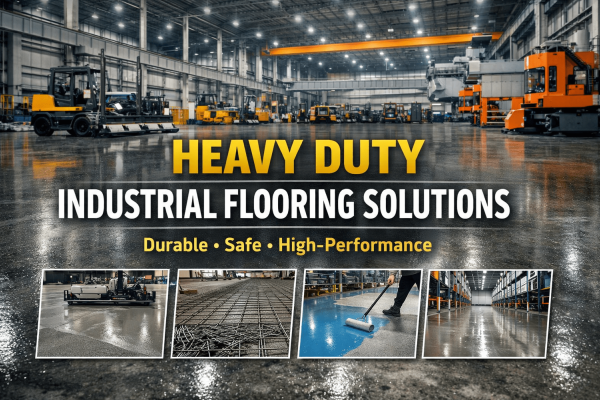
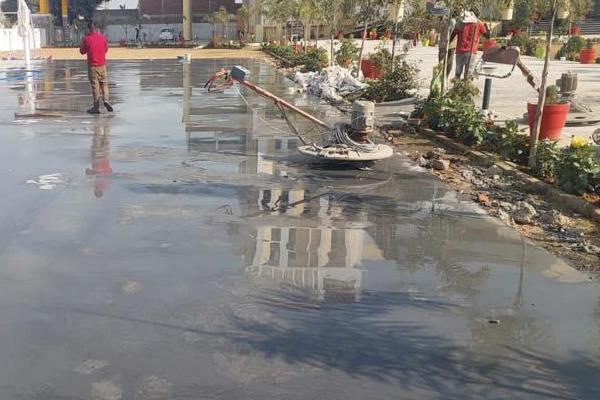
Industrial zones require strong and durable road infrastructure capable of handling heavy vehicles, continuous truck movement, and harsh operating conditions. Traditional roads often fail under extreme industrial loads, leading to cracks, potholes, and high maintenance costs. This is why RCC, CC, and PQC road construction methods are widely used in modern industrial projects.
These concrete-based road systems provide superior strength, long service life, and better load-bearing capacity compared to standard bituminous roads. From factories and logistics parks to warehouses and ports, RCC, CC, and PQC roads play a critical role in ensuring smooth transportation and operational efficiency.
In this guide, we will explain the step-by-step process of RCC, CC, and PQC road construction in industrial zones, including materials used, construction methods, and best practices.
1. Understanding RCC, CC & PQC Roads
Before starting construction, it is important to understand the difference between these road systems.
RCC Roads (Reinforced Cement Concrete Roads)
RCC roads contain:
Cement concrete
Reinforcement steel (TMT bars or mesh)
Features:
✔High structural strength
✔Better crack resistance
✔Suitable for heavy industrial loads
Applications:
✔Industrial plants
✔Container yards
✔Heavy truck movement zones
CC Roads (Cement Concrete Roads)
CC roads are plain cement concrete roads without heavy reinforcement.
Features:
✔Durable and low maintenance
✔Suitable for medium to heavy traffic
✔Long-lasting performance
Applications:
✔Internal factory roads
✔Parking areas
✔Residential and commercial roads
PQC Roads (Pavement Quality Concrete Roads)
PQC is a high-quality concrete layer designed specifically for pavements.
Features:
✔High compressive strength
✔Superior abrasion resistance
✔Excellent load distribution
Applications:
✔Highways
✔Industrial corridors
✔Airport pavements
✔Logistics parks
Importance of Concrete Roads in Industrial Zones
Industrial roads face:
✔Heavy truck traffic
✔Continuous forklift movement
✔Oil and chemical exposure
✔High load stresses
Concrete roads offer:
✔Longer lifespan
✔Lower maintenance
✔Better load-bearing capacity
✔Reduced deformation and rutting
This makes RCC, CC, and PQC roads ideal for industrial infrastructure.
Step-by-Step RCC, CC & PQC Road Construction Process
Step 1: Site Survey & Planning
The first step involves detailed planning and site analysis.
Activities Include:
✔Soil investigation
✔Traffic load analysis
✔Drainage planning
✔Road alignment marking
Purpose:
Proper planning ensures the road can withstand expected industrial loads and environmental conditions
Step 2: Earthwork & Subgrade Preparation
The subgrade is the foundation layer of the road.
Process:
✔Remove vegetation and loose soil
✔Excavate weak areas
✔Compact the soil using rollers
Importance:
A strong subgrade prevents:
✔Settlement issues
✔Surface cracking
✔Uneven load distribution
Compaction tests are conducted to ensure required density.
Step 3: Granular Sub-Base (GSB) Layer
A granular sub-base layer is laid above the compacted soil.
Materials Used:
✔Crushed stone aggregates
✔Gravel
✔Granular materials
Functions:
✔Improves drainage
✔Distributes loads evenly
✔Enhances pavement stability
The layer is compacted using vibratory rollers.
Step 4: Wet Mix Macadam (WMM) Layer
The WMM layer provides additional strength and support.
Construction Process:
✔Mix aggregates with water
✔Spread evenly using pavers
✔Compact thoroughly
Benefits:
✔Higher load-bearing capacity
✔Better surface uniformity
The layer is compacted using vibratory rollers.
Step 5: Formwork Installation
Formwork is installed to maintain road dimensions during concrete placement.
Purpose of Formwork:
✔Controls road width and thickness
✔Prevents concrete leakage
✔Ensures proper alignment
Steel or rigid forms are commonly used for industrial roads.
Step 6: Reinforcement Placement (For RCC Roads)
In RCC roads, reinforcement steel is placed before concrete pouring.
Reinforcement Includes:
✔TMT bars
✔Welded wire mesh
✔Dowel bars and tie bars
Benefits:
✔Reduces cracking
✔Improves tensile strength
✔Enhances structural durability
Step 7: Concrete Mixing & Pouring
Concrete is prepared according to design specifications.
Materials Used:
✔Cement
✔Aggregates
✔Water
✔Admixtures
Methods:
✔Transit mixers
✔Batching plants
✔Concrete pavers
For PQC roads, high-grade concrete is used to achieve superior strength and abrasion resistance.
Step 8: Surface Leveling & Finishing
Concrete is leveled using:
✔Vibratory screeds
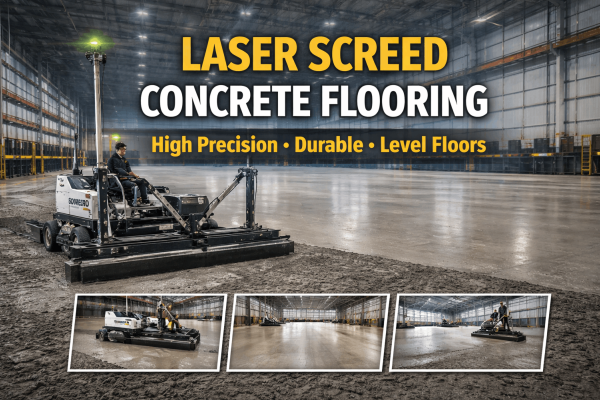
✔Laser screed machines
✔Trowels
Surface Finishes Include:
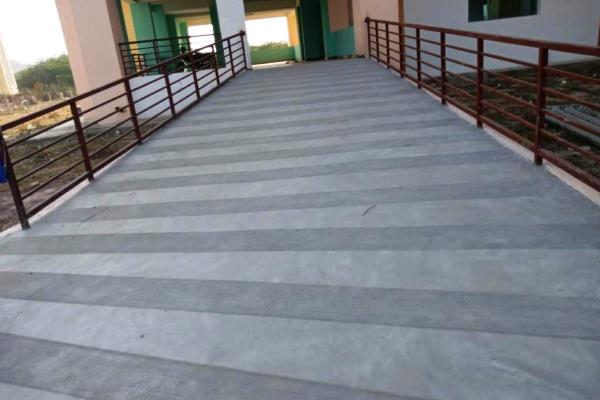
✔Broom finish for skid resistance
✔Smooth finish for industrial zones
Proper leveling ensures:
✔Better vehicle movement
✔Reduced vibration
✔Long-term durability
Step 9: Joint Cutting & Sealing
Concrete roads require joints to control cracking caused by temperature changes.
Types of Joints:
✔Expansion joints
✔Contraction joints
✔Construction joints
Joint Sealants:
Flexible sealants prevent water penetration and damage.
Step 10: Curing Process
Curing is critical for concrete strength development.
Methods:
✔Water curing
✔Curing compounds
✔Wet coverings
Recommended Duration:
7–14 days depending on weather conditions.
Proper curing improves:
✔Strength
✔Durability
✔Crack resistance
Step 11: Quality Testing & Inspection
Quality control ensures the road meets industrial standards.
Common Tests:
✔Slump Tests
✔Cube compressive strength test
✔Thickness checks
✔Surface flatness evaluation
Testing helps identify defects before project completion.
4. Advantages of RCC, CC & PQC Roads
High Durability:
Concrete roads can last 25–30 years with proper maintenance.
Low Maintenance:
Minimal repairs compared to asphalt roads.
Better Load Capacity:
Ideal for industrial trucks and heavy machinery.
Abrasion Resistance:
Suitable for harsh industrial operations.
Cost-Effective Long-Term:
Higher initial cost but lower lifecycle expense.
5. Best Practices for Industrial Road Construction
Use High-Quality Materials:
Quality aggregates and cement improve road lifespan.
Ensure Proper Drainage:
Poor drainage weakens road foundations.
Follow IRC Standards:
Indian Roads Congress guidelines ensure safety and durability.
Use Skilled Contractors:
Professional execution minimizes defects.
Conclusion
RCC, CC, and PQC road construction methods are essential for modern industrial infrastructure. Their superior strength, durability, and load-bearing capacity make them ideal for factories, warehouses, logistics parks, and industrial zones.
By following the correct step-by-step construction process—from subgrade preparation to curing and testing—industries can achieve long-lasting roads with minimal maintenance and excellent operational performance.
Investing in high-quality concrete roads ensures smoother transportation, reduced downtime, and stronger industrial infrastructure for the future.