Introduction
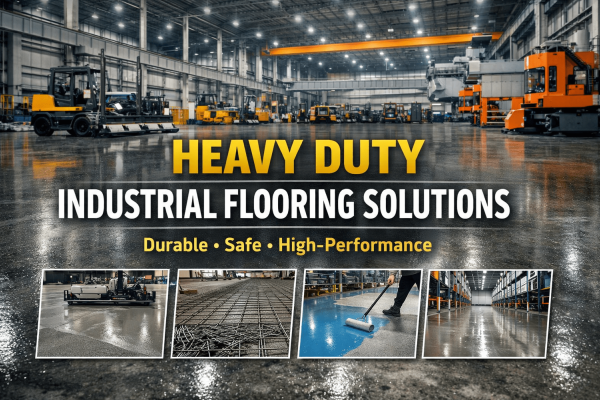
Industrial facilities demand flooring systems that can withstand extreme conditions—heavy machinery, constant movement, chemical exposure, and high foot traffic. This is where heavy duty industrial flooring solutions play a crucial role. Unlike conventional flooring, industrial flooring is engineered for strength, durability, safety, and long-term performance.
From warehouses and manufacturing plants to logistics hubs and commercial facilities, choosing the right industrial concrete flooring solution directly impacts productivity, maintenance costs, and workplace safety. In this blog, we explore everything you need to know about heavy duty industrial flooring, its benefits, applications, and the best flooring systems available today.
What Are Heavy Duty Industrial Flooring Solutions?
Heavy duty industrial flooring solutions are specialized flooring systems designed to perform under extreme industrial conditions. These floors are built to handle:
✔Heavy static and dynamic loads
✔Continuous forklift and vehicle movement
✔Abrasion and impact
✔Chemical spills and moisture
✔Temperature variations
Industrial flooring is not just about strength—it also ensures surface flatness, durability, easy maintenance, and operational safety.
Why Heavy Duty Industrial Flooring Is Essential
1. Load-Bearing Capacity
Industrial floors must support heavy machinery, storage racks, pallets, and vehicles without cracking or deforming. Advanced concrete flooring systems such as SFRC flooring and laser screed concrete flooring provide superior load-bearing performance.
2. Long-Term Durability
Poor flooring leads to frequent repairs, downtime, and increased costs. Heavy duty industrial flooring solutions are designed for long service life with minimal maintenance.
3. Safety & Compliance
Slip resistance, joint stability, and surface uniformity are critical for worker safety. Proper industrial flooring helps reduce accidents and supports safety compliance standards.
4. Cost Efficiency
Although high-performance flooring may seem like a higher initial investment, it significantly reduces repair, replacement, and maintenance costs over time.
Types of Heavy Duty Industrial Flooring Solutions
1. Industrial Concrete Flooring
Concrete remains the backbone of industrial flooring due to its strength and versatility. When enhanced with modern techniques, it becomes a high-performance flooring system.
Key advantages:
✔High compressive strength
✔Excellent durability
✔Suitable for heavy machinery
✔Cost-effective for large areas
2. Laser Screed Concrete Flooring
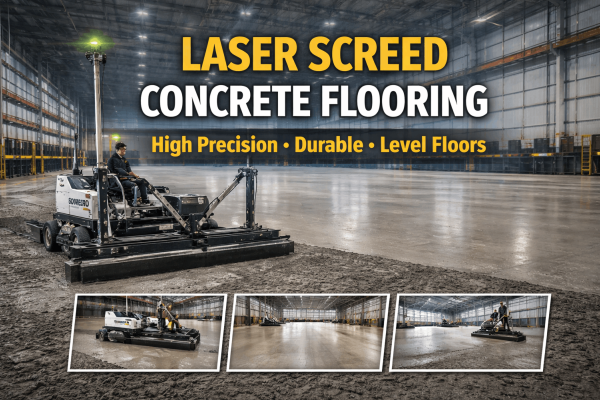
Laser screed concrete flooring is ideal for large industrial spaces requiring superior flatness and level accuracy.
Benefits include:
✔High floor flatness (FF & FL values)
✔Faster construction
✔Reduced surface defects
✔Ideal for warehouses and logistics centers
This flooring solution improves operational efficiency, especially for automated storage and material handling systems.
3. SFRC Flooring Solutions
Steel Fiber Reinforced Concrete (SFRC) flooring is one of the most advanced heavy duty industrial flooring solutions.
Key features:
✔Reduced or eliminated traditional reinforcement
✔Improved crack control
✔High impact resistance
✔Excellent load distribution
SFRC flooring is widely used in factories, warehouses, ports, and heavy industrial units.
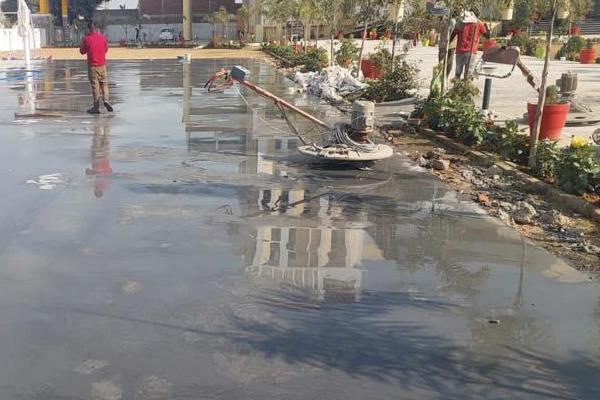
4. TRIMIX Flooring
TRIMIX flooring solutions offer a high-strength, wear-resistant surface using vacuum dewatering technology.
Advantages:
✔High abrasion resistance
✔Smooth, dust-free surface
✔Enhanced strength
✔Long-lasting performance
TRIMIX floors are suitable for industrial sheds, parking areas, and production floors.
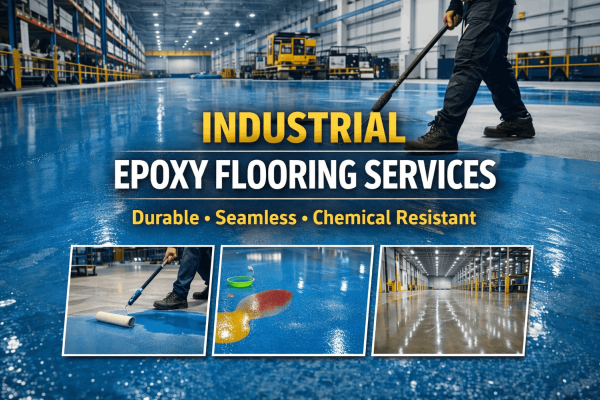
5. Epoxy Industrial Flooring
Industrial epoxy flooring systems are commonly used where chemical resistance and hygiene are critical.
Benefits include:
✔Seamless surface
✔Chemical and stain resistance
✔Easy cleaning and maintenance
✔Improved aesthetics
Epoxy flooring is ideal for pharmaceutical plants, food processing units, and laboratories.
Applications of Heavy Duty Industrial Flooring
Heavy duty industrial flooring solutions are widely used across various industries:
✔Warehouses & logistics centers
✔Manufacturing plants
✔Automobile & engineering units
✔Power plants
✔Cold storage facilities
✔Commercial & industrial buildings
Each application requires a customized flooring approach based on load, usage, and environmental conditions.
Key Factors to Consider Before Choosing Industrial Flooring
When selecting the right industrial flooring solution, consider:
✔Load requirements (static & dynamic)
✔Type of industrial activity
✔Surface flatness requirements
✔Chemical or moisture exposure
✔Maintenance expectations
✔Project timeline
A professionally designed and executed flooring system ensures optimal performance and long-term reliability.
Benefits of Professional Industrial Flooring Installation
Hiring experienced professionals for heavy duty industrial flooring solutions ensures:
✔Proper sub-base preparation
✔Accurate level control
✔Correct material selection
✔Long-lasting performance
✔Reduced future repair costs
Quality installation is as important as choosing the right flooring system.
Conclusion
Choosing the right heavy duty industrial flooring solution is a critical investment for any industrial or commercial facility. From laser screed concrete flooring and SFRC floors to TRIMIX and epoxy flooring systems, modern industrial flooring offers unmatched durability, safety, and performance.
A well-designed industrial floor improves operational efficiency, enhances safety, and delivers long-term cost savings. Whether you are constructing a new facility or upgrading an existing one, investing in high-quality industrial flooring solutions ensures a strong foundation for your business growth.